


What to visit in Mijas? Donkeys and charming white alleys
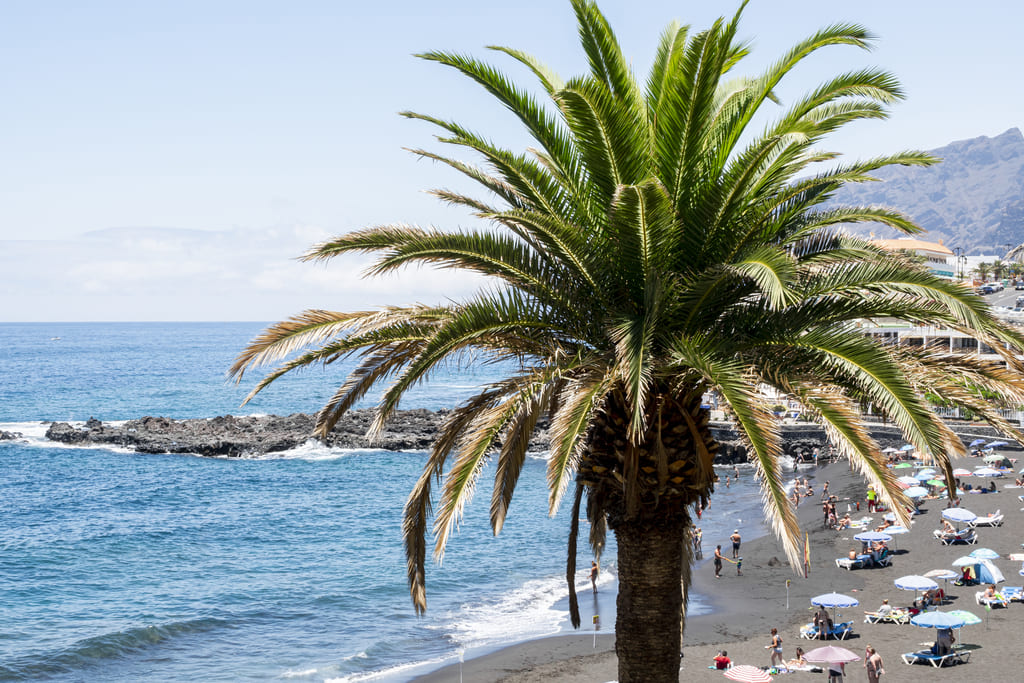
Mijas is a municipality in the province of Málaga, Andalusia, split into two very different halves. Mijas Pueblo is a whitewashed mountain village 428 metres above sea level, roughly 8 km and 15 minutes uphill from Fuengirola, known for its cobbled old town, panoramic viewpoints and an oval bullring. Mijas Costa is the coastal strip below it, with around 12 km of Mediterranean beaches, golf resorts and shopping centres. Most visitors see Mijas Pueblo in half a day and spend the rest of the day on the coast. The two areas are not walkable from each other — you will need a car, the M-122 bus or a taxi.
What to visit in Mijas: the shortlist
| Attraction | Where | Time needed | Cost | Best for |
| Old town (Calle San Sebastián, Plaza Virgen de la Peña) | Mijas Pueblo | 1–2 h | Free | First-time visitors, photography |
| Ermita de la Virgen de la Peña | Mijas Pueblo | 20 min | Free | Views over the coast |
| Jardines de la Muralla | Mijas Pueblo | 30 min | Free | Shaded walk, viewpoints |
| Plaza de Toros (oval bullring) | Mijas Pueblo | 30 min | €[VERIFY] | Architecture, small museum |
| Carromato de Mijas (miniatures museum) | Mijas Pueblo | 30–45 min | €[VERIFY] | Curiosities, rainy days |
| Museo Histórico-Etnológico | Mijas Pueblo | 30 min | Free [VERIFY] | Local history and traditions |
| La Cala de Mijas beach | Mijas Costa | Half day | Free | Families, calm water |
| Sendero Litoral (coastal boardwalk) | Mijas Costa | 1–3 h | Free | Walking, sunsets |
| Aquamijas water park | La Cala de Mijas | Half day | €[VERIFY] | Children, summer only |
| Sierra de Mijas trails | Above Mijas Pueblo | 2–5 h | Free | Hikers, spring and autumn |
If you only have one day, the honest advice is: morning in Mijas Pueblo, lunch there, afternoon on the beach at La Cala. Trying to add Fuengirola on the same day means rushing all three.
What to visit in Mijas Pueblo
Mijas Pueblo is a pueblo blanco built into the southern slope of the Sierra de Mijas, facing the Mediterranean. Its historic core is compact — you can walk the whole of it in an hour — but the gradients are steep and the paving is uneven cobblestone, so sandals and buggies both struggle.
The old town
The streets around Calle San Sebastián and Plaza de la Constitución are the postcard Mijas: lime-washed walls, geranium pots, wrought-iron balconies, and artisan shops selling ceramics and leather. Calle San Sebastián is the most photographed street in the village and is at its emptiest before 10:30 in the morning, when the coach parties from Torremolinos and Benalmádena arrive.
Ermita de la Virgen de la Peña
This small sanctuary is carved into the rock beside the Muralla gardens and houses the image of the Virgen de la Peña, patron saint of Mijas. It was excavated by Mercedarian monks in the late 16th century [VERIFY exact date with the Ayuntamiento de Mijas]. The terrace outside gives the widest view of the coastline, from Fuengirola round to Marbella on a clear day.
Plaza de Toros
Mijas has one of the very few oval bullrings in Spain — most are perfectly circular. Its unusual shape is a consequence of the site: there simply was not enough flat ground on the hillside for a circle. It also houses a small taurine museum.
Carromato de Mijas (Museum of Miniatures)
An eccentric collection of miniature curiosities assembled by the travelling performer known as Professor Max. It is genuinely odd, takes half an hour, and is the single best option in the village when it rains.
Museo Histórico-Etnológico
Housed in the former town hall, this museum reconstructs the agricultural Mijas that existed before tourism: oil presses, wine vats, bread ovens and household tools. It is the fastest way to understand why the village looks the way it does.
Jardines de la Muralla
Terraced gardens built along the line of the old Moorish walls, with fountains, viewpoints and enough shade to be usable in August. This is where most visitors get their photo of the coast.
Burro taxis: what they are, and what you should know
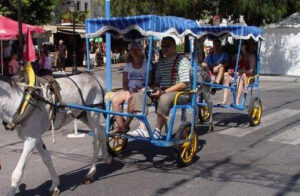
A burro taxi is a donkey used to carry tourists or pull a small cart through Mijas Pueblo. The practice began in the 1960s, when local labourers coming down from the fields found that visitors wanted to pay for a ride, and it has since become one of the images most associated with the village.
It is also genuinely controversial. Animal welfare organisations have campaigned against the burro taxis for years, and Mijas town hall has introduced welfare rules covering working hours, rest periods, weight limits and veterinary checks in response [VERIFY current regulations and any recent changes with the Ayuntamiento de Mijas before publishing]. Plenty of visitors now choose not to take a ride.
We think the useful thing to tell you is simply this: the donkeys are there, opinions differ, and you are not obliged to use them to enjoy the village. If you would rather not, the alternatives are the tourist train that loops the old town, or your own feet — the historic centre is small enough that walking is faster than either.
Where to park in Mijas Pueblo
Mijas Pueblo has no through-traffic in its historic core, so every visit begins with parking. Between roughly 11:00 and 16:00 in July and August, assume the central car parks are full.
| Car park | Type | Walk to Plaza Virgen de la Peña | Notes |
| Parking Virgen de la Peña | Underground, paid | 1–2 min | Closest to everything; fills first. Price: €[VERIFY] / hour |
| Avenida Virgen de la Peña | Free, on-street | 3–5 min | Limited spaces, gone by mid-morning |
| El Juncal | Surface, [free/paid — VERIFY] | 10–15 min uphill | Best bet in high season; the walk back up is steep |
| Near Ermita del Calvario | Informal roadside | 10 min | Scenic approach; not a formal car park, park considerately |
Practical notes from driving it ourselves: the approach road is the A-387 from Fuengirola, which is well surfaced but tightly curved — allow 20 minutes rather than 15 if you are not used to mountain roads. Once inside the village, do not follow a satnav down a street that looks too narrow; it probably is. And if you are hiring a car for this trip, a small or compact model is a real advantage here, not just a cheaper one.
What to visit in Mijas Costa
Mijas Costa runs for about 12 km along the coast between Fuengirola and Marbella, taking in La Cala de Mijas, Calahonda, Riviera del Sol and El Chaparral.
| Beach | Character | Water | Good for |
| La Cala de Mijas | Wide, well serviced, village behind it | Usually calm | Families, all-day stays |
| El Bombo | Smaller, less built up | More exposed | Surfing and paddle surf |
| Calahonda | Coves and rockier stretches | Variable | Snorkelling, water sports |
| El Chaparral | Quieter, backed by cliffs | Calm | Escaping the crowds |
Beyond the beaches:
- Sendero Litoral — a coastal boardwalk and path running the length of Mijas Costa. Flat, well signposted, and best walked in the two hours before sunset.
- La Cala Golf Resort and neighbouring courses — Mijas Costa is one of the densest concentrations of golf on the Costa del Sol.
- Aquamijas — water park in La Cala de Mijas, open summer season only [VERIFY dates].
- El Zoco, Calahonda — smaller commercial centre with restaurants and shops, useful if you are staying nearby.
Where to park in Mijas Costa
Parking is far easier on the coast than in the village, but La Cala fills up in August.
- La Cala de Mijas beach — a mix of free surface car parks and street parking behind the promenade. Arrive before 11:00 in high season.
- El Zoco, Calahonda — large free car park; convenient for the western beaches.
- Urbanisation street parking (Riviera del Sol, Calahonda) — generally free, but watch for residents-only markings and yellow lines.
Hiking in the Sierra de Mijas
The Sierra de Mijas rises directly behind the village, with Pico Mijas at roughly 1,150 m [VERIFY]. Trails start from the top of the village near the Ermita del Calvario and climb through pine forest to ridge-line views taking in both the Mediterranean and, on exceptionally clear winter days, the Rif mountains in Morocco.
Go in spring or autumn. There is almost no shade above the tree line, no water on the route, and the sierra is genuinely dangerous in a July heatwave.
Where to eat in Mijas Pueblo
Mijas Pueblo cooking is inland Andalusian rather than coastal: migas, gazpacho and ajoblanco in summer, sopa de picadillo and stews in winter. Pescaíto frito is better eaten down on the coast in La Cala, where it comes off the boats.
The restaurants immediately on Plaza Virgen de la Peña have the views; the ones two or three streets back generally have the better value. Book ahead for Sunday lunch, which is a serious local institution.
Fuengirola: the natural base
Fuengirola sits at the foot of the Mijas road, and most people visiting Mijas actually stay, land or hire a car here.
| From Fuengirola to | Distance | Driving time |
| Mijas Pueblo | ~8 km | 15–20 min |
| La Cala de Mijas | ~9 km | 12 min |
| Calahonda | ~15 km | 18 min |
| Málaga Airport (AGP) | ~27 km | 25–30 min |
What to see in Fuengirola
- Sohail Castle — a fortification of Caliphal origin (10th century) on the hill at the mouth of the Fuengirola river, with views along the coast in both directions. It hosts concerts in summer.
- Bioparc Fuengirola — an immersive zoo built around recreated habitats rather than cages; consistently the top family attraction in the town.
- Recinto Ferial market — the weekly street market, for produce, clothing and souvenirs. [VERIFY current market day.]
- Miramar Shopping Centre — the largest shopping centre in the area, with cinemas and restaurants.
- Paseo Marítimo — an almost 8 km seafront promenade, one of the longest in Spain.
Getting around: car, bus or taxi?
| Option | Fuengirola → Mijas Pueblo | Cost | Trade-off |
| Hire car | 15–20 min | Daily rate + parking | Total freedom; you must park in the village |
| Bus (line M-122) | ~25–30 min | Single fare, a few euros [VERIFY] | Cheap and frequent, but tied to the timetable |
| Taxi | 15–20 min | €[VERIFY] each way | Simple for one trip, expensive for a whole day |
| Cercanías train C-1 | Does not reach Mijas Pueblo | — | Useful along the coast only (Málaga–Fuengirola) |
The case for a car is specific rather than general: Mijas Pueblo, Mijas Costa’s quieter beaches, the sierra trailheads and the inland villages behind them are not connected to each other by public transport. If your plan is one village visit, the bus is fine. If your plan is to see the municipality properly, it is not.
Miami Car Hire is based in Fuengirola with pick-up at Málaga Airport, and we recommend a compact vehicle for anyone driving up to Mijas Pueblo — the streets and the car park ramps were not designed for large cars. [Add: fleet link, transparent pricing statement, whether fuel and insurance are included.]
Frequently asked questions
Is Mijas Pueblo worth visiting?
Yes, if you want to see a traditional Andalusian white village without driving inland for an hour. It is one of the most accessible pueblos blancos from the Costa del Sol resorts — around 15 minutes from Fuengirola — and its old town, viewpoints and oval bullring can be seen comfortably in half a day.
How far is Mijas Pueblo from Fuengirola?
About 8 km by the A-387, or 15 to 20 minutes by car. The M-122 bus takes roughly 25 to 30 minutes.
What is the difference between Mijas Pueblo and Mijas Costa?
They are two parts of the same municipality. Mijas Pueblo is the historic mountain village at 428 m altitude; Mijas Costa is the 12 km coastal strip below it, including La Cala de Mijas and Calahonda. They are around 10 to 15 minutes apart by car.
Where should I park in Mijas Pueblo?
Parking Virgen de la Peña is the closest to the old town but fills up first. In July and August, head straight for El Juncal at the village entrance and walk the 10 to 15 minutes up.
What are the burro taxis in Mijas?
Donkeys used to carry visitors or pull carts through Mijas Pueblo, a practice dating from the 1960s. They are a well-known local tradition and also a subject of ongoing animal-welfare debate, with municipal regulations in place covering working conditions. Visitors who prefer not to ride can walk the old town or take the tourist train.
Do you need a car to visit Mijas?
Not for Mijas Pueblo alone — the M-122 bus from Fuengirola runs frequently. You do need one to combine the village with the quieter Mijas Costa beaches, the golf resorts or the Sierra de Mijas trailheads, none of which are linked to each other by public transport.
What is the best time of year to visit Mijas?
April to June and September to October: warm enough for the beaches, cool enough for the old town’s hills and the sierra trails. July and August are hot and crowded, with the village car parks full by late morning.
Is Mijas Pueblo suitable for wheelchairs or pushchairs?
Partially. The main square and the Muralla gardens are manageable, but much of the old town is steep cobbled street. Plan around the flatter streets near Plaza Virgen de la Peña.
Which beach in Mijas is best for families?
La Cala de Mijas — fine sand, generally calm water, and a village directly behind the beach with restaurants, toilets and shops.
Can you visit Mijas and Fuengirola in one day?
It is possible but tight. A better split is a morning in Mijas Pueblo and an afternoon on the Mijas Costa beaches, leaving Fuengirola — Sohail Castle, Bioparc and the promenade — for a separate day.
We hope you enjoyed this article, feel free to keep reading our blog! You can continue with: Accessible beaches for disabled people in Malaga.
